The sink sits at the heart of every kitchen. It's where meals begin and dishes end, where style meets function dozens of times each day. But even the most beautiful sink loses its appeal when residue builds up or odours creep in. The instinct is to reach for harsh chemical cleaners that promise fast results, but these products often cause long-term damage to surfaces and finishes that cost far more to replace than to protect.
What if the solution to a fresher, cleaner sink is already sitting in your pantry?
For generations, the simple combination of baking soda and vinegar has served as a reliable remedy for buildup, dullness, and odours. It's not just effective. It's gentle, sustainable, and safe for the premium materials that make quality kitchens worth investing in.
Baking soda is a mild abrasive and natural deodoriser. Unlike harsh scouring powders that scratch and damage surfaces, baking soda provides just enough texture to lift stains and residue without harming stainless steel, granite composite, or ceramic finishes. You get cleaning power without the risk.
Its alkaline nature also plays an important role. Food particles, especially acidic ones like tomato sauce, citrus, and vinegar-based dressings, leave residue that contributes to gradual buildup and eventual odours. Baking soda neutralises these acids, breaking the cycle before smells develop.
As a deodoriser, baking soda doesn't just mask odours. It absorbs them. The same property that makes an open box effective in your refrigerator works on your sink, pulling odour-causing compounds out of the environment rather than covering them with fragrance.
Vinegar brings a different set of strengths to the partnership. Its natural acidity dissolves what baking soda can't: grease, soap scum, and the mineral deposits that hard water leaves behind. These are the stubborn residues that make sinks look dull and feel grimy even after washing.
When vinegar meets baking soda, the familiar fizzing reaction occurs. This isn't just satisfying to watch. The bubbling action physically lifts debris from surfaces, reaches into drain openings and overflow channels, and dislodges buildup that wiping alone would miss. The reaction does mechanical work that supplements your scrubbing effort.
Equally important is what vinegar doesn't leave behind. Unlike chemical cleaners that deposit residues of their own, vinegar evaporates cleanly. Your sink is left genuinely clean, not coated with a film that attracts new dirt.
The method is as elegant as it is simple.
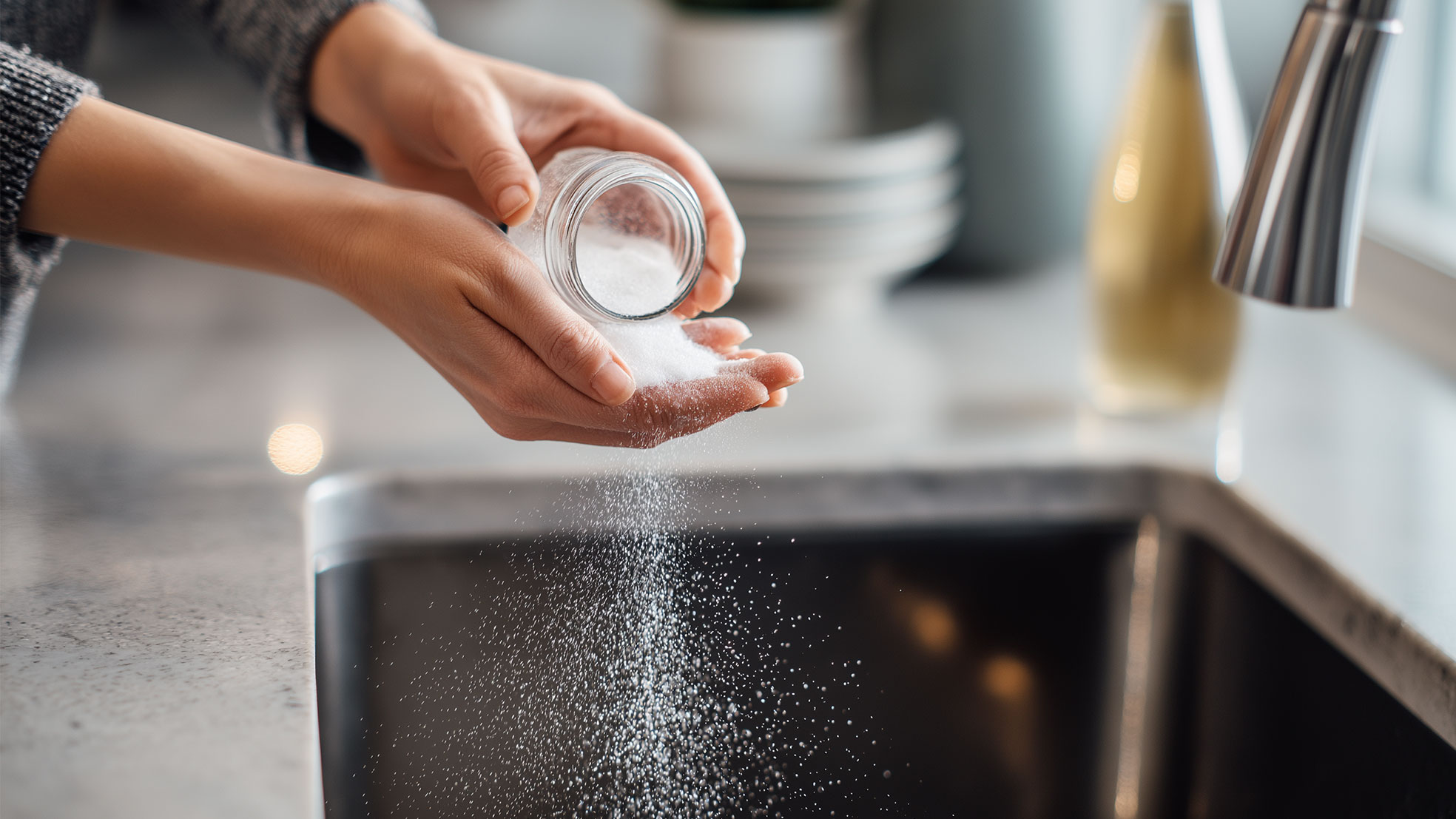
Start by sprinkling baking soda generously across the entire sink surface, paying attention to corners, the area around the drain, and any spots where residue tends to accumulate. Don't be shy with the quantity. A thorough coating works better than a sparse dusting.
Next, pour warm vinegar slowly over the baking soda. You'll see the fizzing reaction begin immediately. Let this work for three to five minutes, allowing the bubbles to lift debris and the chemical reaction to break down residue. For drains and overflow openings, pour additional vinegar directly into these areas to ensure the reaction reaches where buildup hides.
After the fizzing subsides, use a soft sponge or cloth to gently work the mixture across all surfaces. The baking soda provides mild abrasion while the vinegar solution helps dissolve remaining residue. Pay attention to textured areas, strainer baskets, and the underside of any removable components.
Rinse thoroughly with hot water, ensuring all baking soda residue washes away. Any powder left behind can dry to a white film, so take the time to rinse completely.
Finally, wipe the sink dry with a soft cloth. For stainless steel sinks, a final polish with a microfiber cloth enhances the mirror-like finish and prevents water spots from forming as the surface air-dries.
The entire process takes less than ten minutes but transforms your sink into a space that feels genuinely refreshed and cared for.
This method works beautifully on most premium sink materials, but understanding which surfaces benefit and which require caution ensures you get results without risk.
Stainless steel sinks respond wonderfully to this treatment. The mild abrasiveness of baking soda won't scratch quality steel, and vinegar effectively removes the mineral deposits and water spots that dull the finish over time. Always dry and polish with a microfiber cloth afterward to prevent new water spots and restore the characteristic shine.
Granite composite sinks handle the combination well. The method freshens the surface and removes residue without dulling the finish or affecting the stone-resin composition. These dense, non-porous materials benefit from the deodorising properties of baking soda and the grease-cutting power of vinegar.
Ceramic and porcelain sinks with their glazed surfaces clean up beautifully with this approach. The gentle abrasion lifts stains without scratching or stripping the protective glaze. White ceramic sinks especially benefit, as the combination helps address the tea, coffee, and food stains that show prominently on light surfaces.
Quartz composite sinks respond similarly to granite composite. The formula is non-aggressive and helps maintain brightness without damaging the engineered surface.
Bio-composite and fibre-based sinks are safe for this method because it avoids the harsh chemicals that could weaken protective coatings or affect the natural fibre components.
Some materials require a modified approach.
Natural stone sinks made from marble, limestone, or soapstone react poorly to vinegar's acidity. The acid can etch the surface, creating dull spots that are difficult or impossible to reverse. For these materials, use baking soda alone without vinegar. Apply as a paste with water, scrub gently, and rinse thoroughly.
Brushed gold, brass, and PVD-coated fixtures around your sink are generally safe, but avoid letting vinegar sit directly on these finishes for extended periods. The acidity can affect certain coatings over time. Apply the mixture to the sink basin itself, work quickly around fixtures, and rinse and dry these areas promptly and thoroughly.
Acrylic and plastic sinks scratch more easily than other materials, and vinegar may cause gradual dulling with repeated use. For these surfaces, gentler dedicated cleaners are a better long-term choice.
Unsealed or raw stone should never contact vinegar. The porous, unprotected surface will absorb the acid and suffer permanent damage.
This baking soda and vinegar treatment works best as a weekly refresh rather than a daily cleaning routine. For everyday maintenance, simple rinsing and wiping with mild soap keeps your sink clean between deeper treatments.
Use the full method when you notice any of the following: a slight odour developing, visible residue or dullness on the surface, mineral deposits around the drain or fixtures, or simply when the sink no longer looks as bright and fresh as it should.
The treatment also works well as a monthly preventive measure. Regular use prevents the gradual accumulation that leads to stubborn problems, keeping your sink in perpetually good condition rather than cycling between neglect and intensive cleaning.
In a well-designed kitchen, cleaning isn't just maintenance. It's a form of respect for the space where daily life unfolds. The materials you've chosen, the fixtures you've invested in, the overall atmosphere you've created. All of it deserves care that preserves rather than degrades.
Natural solutions like baking soda and vinegar align with this philosophy. They clean effectively without harsh chemicals, protect surfaces without leaving residues, and connect you to a tradition of simple, sensible home care that has worked for generations.
There's something satisfying about the fizzing reaction, the visible action of cleaning happening before your eyes. It transforms a chore into a small ritual, a moment of attention that keeps your kitchen feeling cared for.
The key to a clean, odour-free kitchen isn't expensive chemicals or aggressive scrubbing. It's understanding the natural balance between surface, material, and daily care. Baking soda and vinegar succeed because they work with your sink's materials rather than against them, cleaning effectively while respecting the craftsmanship of quality fixtures.
Your kitchen should always feel as inspiring as it looks. Simple routines that maintain beauty and function without causing wear or damage are the foundation of that lasting appeal. Choose quality materials, adopt gentle care habits, and your sink will reward you with years of freshness and elegance.
Want to dive deeper into sink care and maintenance? Explore these guides:
→ How to Prevent and Remove Food Stains from White Ceramic Sinks Learn which foods cause the most stubborn stains and how to address them before they set.
→ How to Prevent Bad Odors in Your Sink Before They Start Discover how material choice, design, and daily habits work together to keep your sink fresh.
→ How to Fix and Prevent Scratches in Stainless Steel Sinks Protect your stainless steel investment with proper care techniques.
→ How to Clean and Care for Your Granite or Quartz Sink Specific guidance for composite stone materials and what they need to stay beautiful.
→ How to Maintain a PVD-Coated Sink: A Complete Guide Everything you need to know about caring for PVD finishes.
→ How to Prevent and Remove Mold in Your Sink Essential tips for maintaining a healthy, mould-free kitchen environment.